
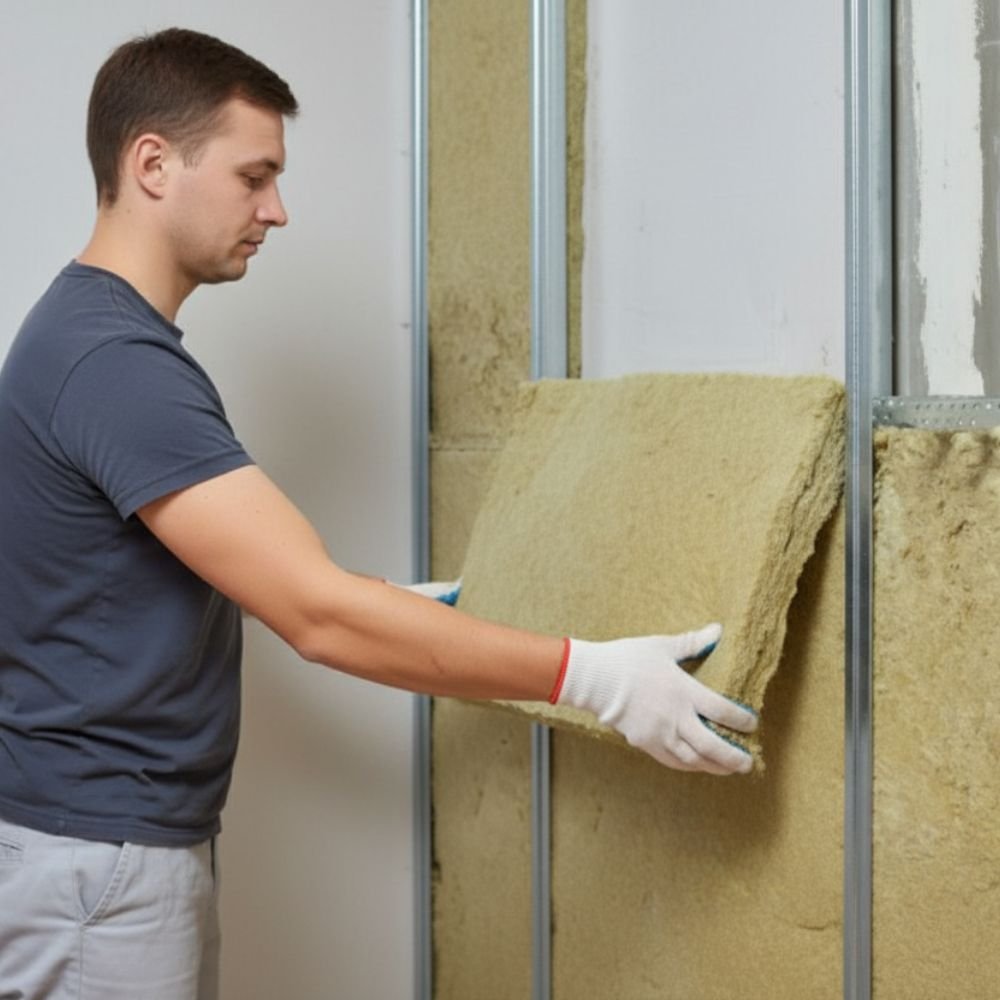
Rock Wool – High-Performance Thermal & Acoustic Insulation Material
Rock wool insulation is one of the most trusted and highly efficient insulation solutions used across modern building construction, industrial projects, and commercial infrastructure. Manufactured from natural basalt rock and recycled slag, rock wool undergoes a controlled high-temperature melting and fiberizing process, which results in a dense, durable and mineral fibre-based insulation material.
Rock wool is widely preferred by architects, engineers, consultants, HVAC experts, and project specification teams because it delivers exceptional fire resistance, superior sound absorption, and remarkable thermal insulation — all in one material. It has a naturally high melting point, making it ideal for fire-rated walls, fire-barrier partitions, ducts, ceilings, roofing systems, industrial furnaces, petrochemical plants, refineries, boilers, and many safety-critical applications. In environments where high temperature resistance is crucial, rock wool performs consistently and provides a robust safeguard against fire hazards.
What is Rock Wool?
Rock wool, also known as mineral wool, is manufactured by melting natural rock — typically basalt, diabase or volcanic stone — at extremely high temperatures, often above 1,500°C. Once the molten rock reaches a controlled viscosity, it is rapidly spun into ultra-fine fibers, similar to the way cotton candy is formed. These fibers are then systematically layered, oriented and bonded using specialized binders to create different product forms such as slabs, rigid boards, blankets, mats, rolls, pipe insulation segments, and customized industrial insulation modules.
Key Benefits of Rock Wool Insulation
* Superior Fire Resistance: Rock wool does not burn and can withstand temperatures up to 1,000°C, making it ideal for fireproof construction.
* Excellent Thermal Protection: Helps maintain indoor temperature and reduces energy consumption.
* Strong Acoustic Performance: Absorbs sound effectively, reducing noise transfer between rooms and floors.
* Moisture & Mold Resistant: Does not absorb water, preventing bacterial or fungal growth.
* Long Service Life: Maintains shape, density, and insulation quality for many years.
* Eco-Friendly & Sustainable: Made from natural minerals and recyclable materials.
Applications of Rock Wool Insulation
Rock wool insulation is suitable for both industrial and residential use. Some common applications include:
* Wall and roof insulation in buildings
* HVAC ducts and air handling units
* Boilers, furnaces, and industrial equipment
* Underdeck insulation for warehouses
* Acoustic paneling for studios and auditoriums
* Pipe insulation in chemical and power plants
* Pre-engineered buildings (PEB) and sandwich panels
* HVAC ducts and air handling units
* Boilers, furnaces, and industrial equipment
* Underdeck insulation for warehouses
* Acoustic paneling for studios and auditoriums
* Pipe insulation in chemical and power plants
* Pre-engineered buildings (PEB) and sandwich panels
Why Choose Rock Wool Insulation?
The performance of insulation depends heavily on the manufacturing quality. Reliable rock wool manufacturers ensure:
- Consistent density and fiber structure
- Low thermal conductivity values
- Accurate fire safety ratings
- Long-lasting and stable performance
Quality rock wool suppliers also provide technical guidance for selecting the right thickness and type—whether slabs, rolls, or pipe sections.
Rock Wool Suppliers for Bulk Project Requirements
For large projects such as airports, metro stations, corporate offices, power plants, and hospitals, choosing the right rock wool suppliers can reduce installation time and material wastage. Professional suppliers help with:
* Bulk quantity fulfillment
* Customized sizes and densities
* On-site installation support
* Fast and reliable delivery timelines
This ensures your insulation performs exactly as required throughout the project lifecycle.
Energy Efficiency and Cost Savings
The performance of insulation depends heavily on the manufacturing quality. Reliable rock wool manufacturers ensure:
- Consistent density and fiber structure
- Low thermal conductivity values
- Accurate fire safety ratings
- Long-lasting and stable performance
Quality rock wool suppliers also provide technical guidance for selecting the right thickness and type—whether slabs, rolls, or pipe sections.
